
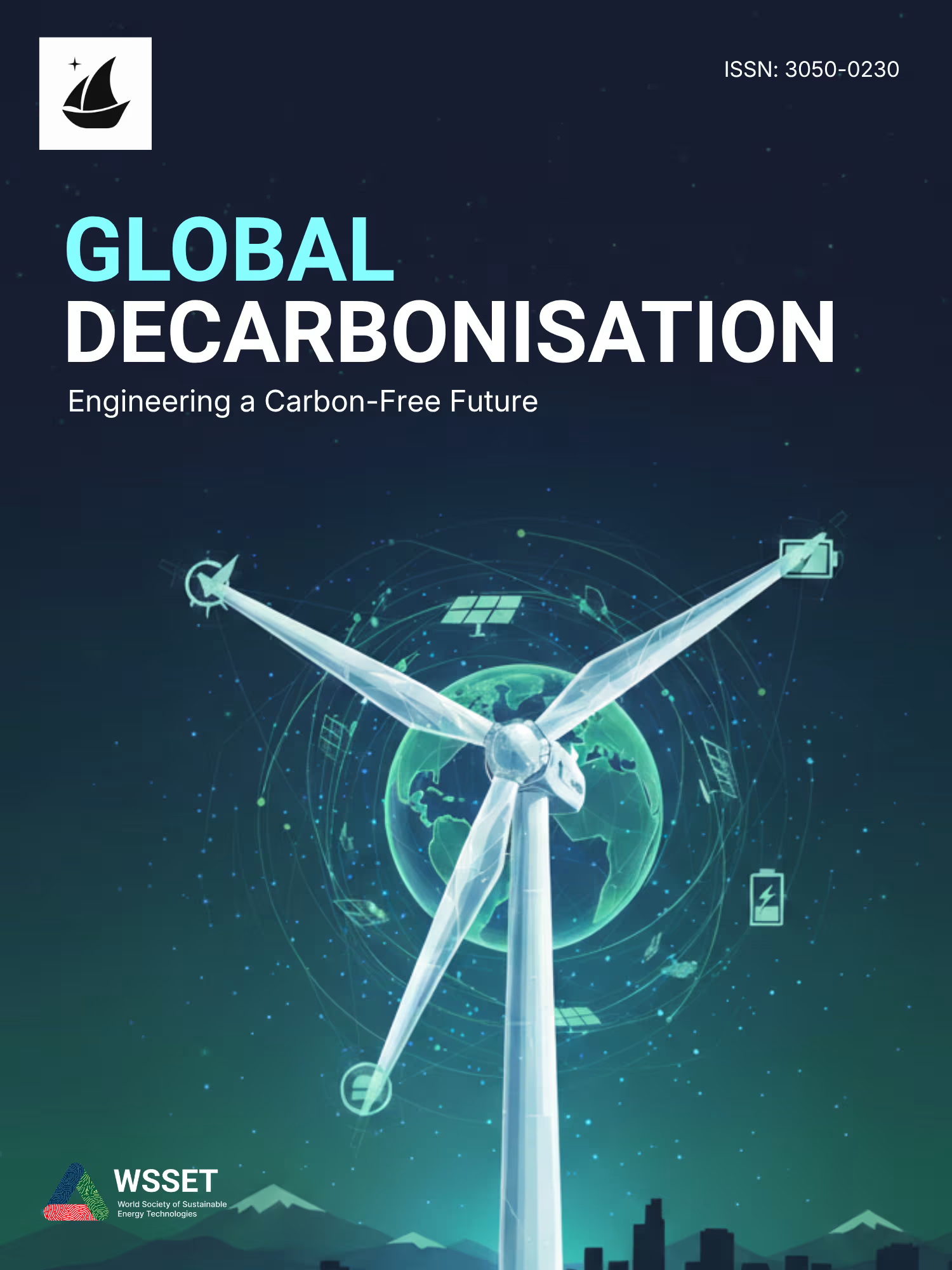
Global Decarbonisation
Science, technology, and economics of carbon reduction and net zero pathways.
114 days
Average across published papers
Urban areas account for approximately 75% of global energy consumption and 60% of carbon emissions, placing cities at the forefront of climate mitigation and adaptation efforts.
Articles
9 days
Submission to first decision
Editors' estimate
94 days
First decision to acceptance
Editors' estimate
11 days
Acceptance to publication
Editors' estimate
114 days
Submission to publication
Average across published papers
The editorial team

Saffa Riffat, PhD
What this journal publishes
Global Decarbonisation (GD) is a peer-reviewed, open access journal committed to advancing the global transition to a net-zero carbon future. The journal serves as a platform for researchers, policymakers, industry experts, and practitioners to share innovative solutions, critical analyses, and emerging trends in decarbonisation across all sectors. It publishes high-impact research that advances theoretical understanding and offers practical implications for those striving to achieve a sustainable, climate-resilient future.
- Zero-carbon technologies and innovations that reduce carbon emissions across sectors
- Renewable energy development and integration into power systems
- Energy efficiency improvements in buildings, transport, and industry
- Carbon capture, utilization, and storage (CCUS)
- Sustainable urban development and low-carbon cities
- Policy frameworks, governance mechanisms, and economic instruments for decarbonisation
- Social and behavioural dimensions of transitioning to a low-carbon economy
- Carbon neutrality strategies and net-zero pathways
- Circular economy practices and resource efficiency
- Decarbonisation of transport and heavy industries
About this journal
- Global Decarbonisation
- Caravel Press
- 3050-0230 (online)
- Open access, free to read
- CC BY 4.0
- Held by the author